What we built

Two Systems. Two Approaches. One Proof.

These are not concept papers. GridProbity and OsciProbity are working MVPs (Minimum Viable Product) — two real power-system intelligence tools built by a single IT professional, using AI capability under deliberately different methodologies. One was built quickly, in flow, shaped by iterative "vibe coding". The other was built deliberately and methodically, with every behavior defined in a specification before a single line of code was written.

Both work. Above all, they demonstrate what a single individual or a small team can now build independently with the right AI tools and domain knowledge.

One engineer. Two enterprise-grade MVPs. AI as the force multiplier.

GridProbity and OsciProbity 2.0 were designed, architected, specified, and built entirely by a single person, augmented by AI coding tools. There was no development team, no dedicated QA, and no separate architects or UI designers. AI handled what previously required scale: the volume of code, the breadth of implementation, and the consistency of patterns. The domain knowledge, methodological choices, architecture, design, and engineering judgment remained human.

System 01 — Transformative Build

GridProbity

Unified Real-Time Power Grid Monitoring & Predictive Analytics Platform

Positioning

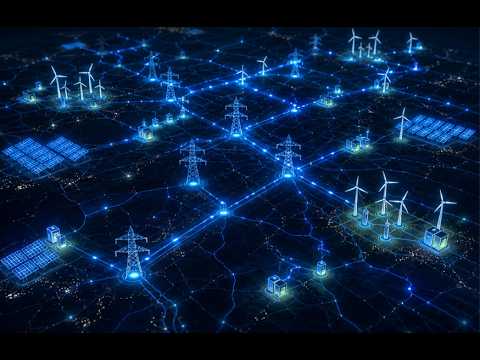
GridProbity is a full-stack power grid monitoring and predictive platform that reimagines what SCADA can be, moving beyond the dense, 1970s-era control-room UI. It is built using a transformative, vibe-driven pattern where AI agents and domain expertise move together in flow, letting architecture emerge from rapid iteration rather than upfront design. AI-assisted coding, modern web technologies, refined Python libraries, and data tooling augment parts of the classic SCADA stack, while engineering judgement and protection-domain knowledge stay firmly human. The result is a minimum-viable platform that one person built with the speed and confidence that previously required a team.

What It Does

GridProbity integrates real-time PMU (Phasor Measurement Unit) data streaming, advanced state estimation, Bayesian predictive modelling, network topology analysis, and power flow calculations into a unified monitoring environment for grid operators and analysts. It presents live grid state, voltage stability indicators, and alert conditions across a multi-view HTML dashboard, with a dedicated operator view, an enhanced analytics dashboard, and a PE (protection engineering) validation interface.

GridProbity Walkthrough Video thumbnail Watch on YouTube

GridProbity Monitoring and Predictive Analytics — full walkthrough recording.

Key UI & Platform Features

Reduced operational risk for grid operators

Continuous real-time state estimation and voltage stability monitoring give control-room teams an always-current view of grid health — enabling faster, more confident decisions before faults escalate into outages.

Unified monitoring across the entire network

A single platform consolidates bus-level measurements, network topology, power-flow calculations, and contingency analysis — eliminating the need for multiple siloed tools and giving engineering teams one authoritative source of truth.

Real-time data pipeline at PMU measurement rates

An open-standards streaming layer capable of ingesting data from 0.1 Hz to 60 Hz — delivering sub-second grid-state updates to dashboards, operator panels, and connected analytics tools through documented API interfaces.

Fast deployment with minimal infrastructure overhead

The platform ships as a self-contained, containerised stack that stands up in a single command — reducing time-to-value from weeks to hours and scaling from a single-server pilot to a load-balanced production environment without architectural changes.

Development Methodology

GridProbity was developed using a transformative, vibe-driven coding pattern. The architecture was not specified upfront — it emerged through fluid collaboration between domain knowledge and AI multi-capabilities. Features were built in the order that felt most natural; the stack was chosen for immediacy (Vanilla JS, no framework overhead); and the UI was refined visually before being defined structurally. The AI agent functioned as a high-autonomy co-pilot, generating large sections of feature code shaped by domain knowledge. Architecture artefacts were authored after the fact to capture what was built.

Technology Footprint

Backend — Python 3.8+

LayerTechnologyPurpose
Web FrameworkFastAPI + Uvicorn (ASGI)REST API + WebSocket server
Numerical CoreNumPy, SciPyArray operations, signal math
Grid ModellingpandapowerPower system load flow, network topology
Streaming IngestionApache KafkaReal-time PMU data stream
VisualisationMatplotlibServer-side plotting and analytics
NotebooksJupyterExploratory analysis, scenario prototyping
Data ValidationPydanticAPI schema validation

Frontend

LayerTechnologyNotes
UIVanilla JS ES6+ / HTML5 / CSS3No framework — lightweight, direct DOM
Real-timeWebSocket API (native browser)Live data feed from backend
BuildStatic files — no bundlerServed via Python HTTP server or Nginx

Infrastructure

LayerTechnology
ContainerisationDocker Compose
Production proxyNginx
Cloud deploymentFly.io, Render
Dev environmentVS Code Dev Containers
System 02 — Spec-Driven Build

OsciProbity 2.0 with LLM Intelligence

Power-System Oscillation Detection Engine

Positioning

OsciProbity 2.0 is a precision oscillation detection and probability-scoring engine built by a single researcher under a strict spec-driven, architecture-first methodology. Every module, every algorithm parameter, every API contract, and every database schema was fully specified across 27 specifications — before a single line of implementation code was written. The AI agents generated code from these specs, producing output that is verifiable, traceable, and structurally sound.

What It Does

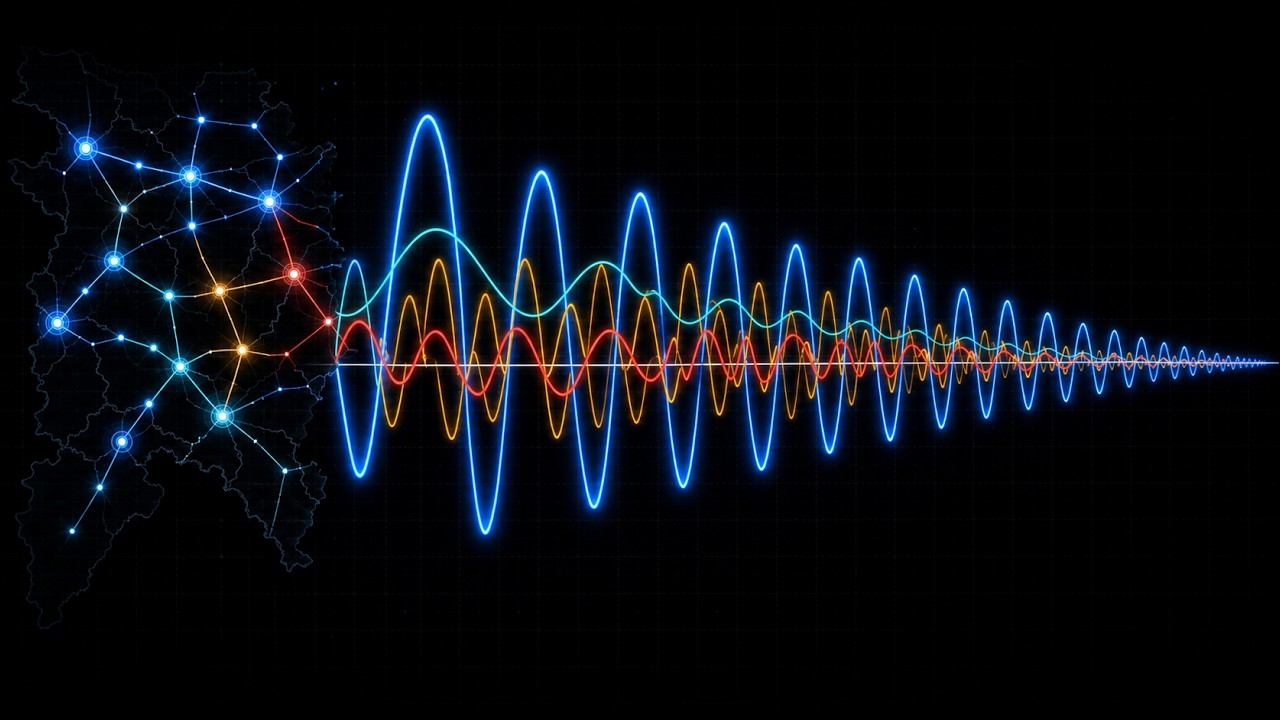
OsciProbity 2.0 ingests real-time PMU data at 200 Hz and runs two parallel detection engines: Inter-area Electro-mechanical oscillations (0.05–4.0 Hz) and IBR Converter Interaction oscillations (4.0–40.0 Hz). Both engines execute an ensemble of six modal identification algorithms — Prony, ERA, ESPRIT, SSI, HTLS, and Matrix Pencil — synthesising outputs into a single confidence-scored probability result. An LLM intelligence layer then generates natural-language intelligence, interpreting events and narrating artefact significance — so DSP (Digital Singal Processing) outputs are legible to both engineers and non-specialist operators.

OsciProbity 2.0 Walkthrough Video thumbnail Watch on YouTube

OsciProbity 2.0 oscillation dashboard — full walkthrough recording.

Key UI & Platform Features

Dual-band oscillation dashboard

Simultaneous IEM and ICI probability readouts, mode frequency and damping displays, and real-time confidence indicators — all specification-defined and contract-traced. The modular design enables addition of further detector types in the future, such as sub-synchronous control interaction (SSCI) events.

LLM-generated event intelligence panel

AI-powered natural language summaries of oscillation events, modes, forensic graphs, and artefacts — bridging DSP output and operator understanding. Runs on a standard 8-core CPU with 32 GB RAM in a fully air-gapped deployment, with no external API calls or third-party dependencies.

Algorithm ensemble transparency

Per-algorithm mode contributions visible alongside the synthesised result. Not hidden in a black box. Every data point has a tooltip showing confidence, algorithm source, damping ratio, and mode frequency.

Fully auditable & traceable by design

OsciProbity is built from the ground up for highly regulated and risk-averse organisations. Every decision, signal, and output is contract-traced, logged, and reproducible — giving compliance teams, auditors, and safety reviewers a complete, unambiguous record of system behaviour.

Development Methodology

OsciProbity 2.0 was developed using a requirements, architecture, design, and spec-driven methodology — four phases completed before any implementation code was written.

1

Requirements

Shared system requirements were elicited from grid engineering first principles, translated into numbered functional requirements covering every detection behaviour.

2

Architecture

System topology, component decomposition, and module boundaries defined and frozen. Two detectors dual-engine architecture established at this stage.

3

Design

API contracts, data schemas, algorithm recipes, and UI wireframes fully designed and reviewed across 27 documents. LLM intelligence layer specified.

4

Specification & Code Generation

Each design artefact hardened into a normative spec with a formal amendment protocol. Only then did code generation begin — AI producing implementation verifiable against spec, not developer intuition.

Technology Footprint

Backend — Python 3.11+

LayerTechnologyVersionPurpose
Web FrameworkFastAPI0.111.0REST API + ASGI server
ASGI ServerUvicorn0.29.0Production server
ORMSQLAlchemy2.0.30Async database access
MigrationsAlembic1.13.1Schema version control
DB Driverasyncpg0.29.0Async PostgreSQL
Data ValidationPydantic2.7.1Schema enforcement
ConfigPyYAML6.0.1Spec-governed YAML config
SerialisationPyArrow16.0.0Parquet artefact storage

LLM Integration

LayerTechnologyRole
LLM RoleOscillation event intelligenceGenerates natural language descriptions of detected events, modes, and artefacts
Integration PointPost-DSP layerReceives structured DSP output; produces operator-readable narrative
DeploymentLocal / on-premiseNo cloud API dependency — runs fully offline

DSP & Scientific Engine

LibraryVersionRole
NumPy1.26.4Array operations, FFT
SciPy1.11.4Signal processing, optimisation
pandas2.2.2Windowed data management
scikit-learn1.4.2DBSCAN clustering for mode ID
statsmodels0.14.2Granger causality, statistics
EMD-signal≥1.6.4Empirical Mode Decomposition (HHT)
vmdpy0.2Variational Mode Decomposition
ssqueezepy0.6.5Synchrosqueezing transform, ridge detection
PyDMD0.4.1Dynamic Mode Decomposition, ERA, Matrix Pencil
joblib1.4.2Parallel algorithm execution

Frontend

LayerTechnologyVersionNotes
UI FrameworkReact19.2.6Component-based, spec-mapped
RoutingReact Router DOM7.15.0Contract-defined routes
StateZustand5.0.13Lightweight, typed store
BuildVite7.3.3Fast HMR dev + production build
LanguageTypeScript5.4.5Type safety across all contracts
TestingVitest3.2.3Unit + integration tests
DOM TestingHappy-DOM20.9.0Headless DOM for Vitest
API MockingMSW2.3.1Contract-faithful API mocking
Domain Expert Validation

Appreciated by Power System and IT Professionals

Both GridProbity and OsciProbity 2.0 have been demonstrated to power system domain experts and IT professionals. The response was positive: the tools were recognised as technically credible, practically relevant, and meaningfully differentiated from existing vendor offerings. What made the reception particularly significant is the context: both tools were built entirely by one person with domain knowledge, augmented by AI. Expert feedback confirmed that the depth of implementation — the dual-band IEM/ICI architecture, the ensemble algorithm design, the LLM-generated event narrative, modern UI of Grid monitoring — is indistinguishable from team-scale engineering effort.

Validation Context

  • Demonstrated to grid engineering professionals familiar with PMU-based monitoring systems
  • Received positive assessment on technical depth and approach validity
  • OsciProbity's features were identified as similar or better compared to equivalent existing systems
  • GridProbity's real-time state estimation and multi-view operator interface reviewed positively for operational fit
  • LLM-generated event intelligence noted as a practical and novel addition for operator accessibility
Methodology comparison

Two Methodologies, Compared Directly

Domain knowledge. The same AI tools. What changes when you build with discipline versus flow? The table below captures the most significant differences observed across both builds — not as a verdict on which is better, but as an honest account of what each approach costs and what it produces.

Dimension GridProbity Transformative Build OsciProbity 2.0 Spec-Driven Build
Build initiation Started from a working concept; evolved in motion Started from requirements elicitation; nothing coded until specs were complete
Architecture Emerged through iteration; captured post-build Defined upfront; frozen before implementation
Role of AI agent High-autonomy co-pilot; generating features from intent Controlled code generator; working from spec context, not conversation
Role of specs Post-hoc documentation Pre-requisite for code generation
LLM integration None Oscillation events, mode, post-DSP intelligence
Frontend approach Vanilla HTML/JS — chosen for speed and directness React 19 + TypeScript — chosen for component contract traceability
Algorithm handling Embedded in working simulation scripts 27 numbered spec documents govern every algorithm parameter
Testing approach Functionality validation. pytest + Vitest + MSW + golden fixture spec
Dependency governance Requirements text file(current versions) Pinned + hashed Requirements text file (normative spec)
Config governance Environment-driven feature flags Spec-versioned YAML; every parameter has a spec reference
Provenance Not tracked Algorithm version, config hash, library versions captured per result
Time to first working UI Fast — days Slower — weeks of specs before first UI
Confidence in correctness Validated by running the system Verifiable against spec before running
Where AI added most value Feature generation, UI layout, rapid prototyping Spec-compliant implementation; reducing logic drift and AI hallucination
What both builds share is more interesting than what separates them: both are enterprise-grade MVPs, both use the same AI tooling, and both were built by a single person with power-system domain knowledge. The difference is not just where the intelligence lives — it is when operationalisation enters the thinking.

In GridProbity, intelligence lives in the domain expert's judgement — catching drift, shaping emergent structure, knowing when it feels right. That is transformative development: a small team exploring the boundaries of what is possible, with the operationalisation plan forming only once the business sees a viable solution worth scaling.

In OsciProbity 2.0, intelligence was front-loaded into the specs — so that code generation became closer to compilation than creation. That is spec-based development: a small-to-medium team undertaking structured delivery, with operational aspects built into the design from the outset and a concrete plan for operationalising it running in parallel with the build itself.

Neither is universally superior. The question any team must answer is: at what stage must operationalisation enter your thinking — and are you structured to carry it through?
What comes next

The Frameworks Behind the Builds

Both artefacts are more than working systems — they are the empirical foundation of a broader research programme into how AI-augmented engineering teams should structure their work.

Building them surfaced something beyond the software itself: a set of repeatable AI development practices, integration patterns for embedding AI into governed workflows, and the beginnings of a practical AI engineering approach that takes seriously both the creative power of generative models and the accountability demands of enterprise environments.

The frameworks that emerged from this work — including the vibe coding pattern observed in GridProbity, the spec-authority model applied in OsciProbity 2.0, and a guardrail framework for constraining AI behaviour within defined operational boundaries — are discussed in the next section.